
Is Fort Collins Walkable for Home Buyers?
Fort Collins can support a walkable lifestyle, but the experience varies significantly by neighborhood. Buyers should evaluate everyday destinations, street design, transit, trails, and winter conditions before choosing a home.
Brandon RearickSeptember 9, 20267 min read
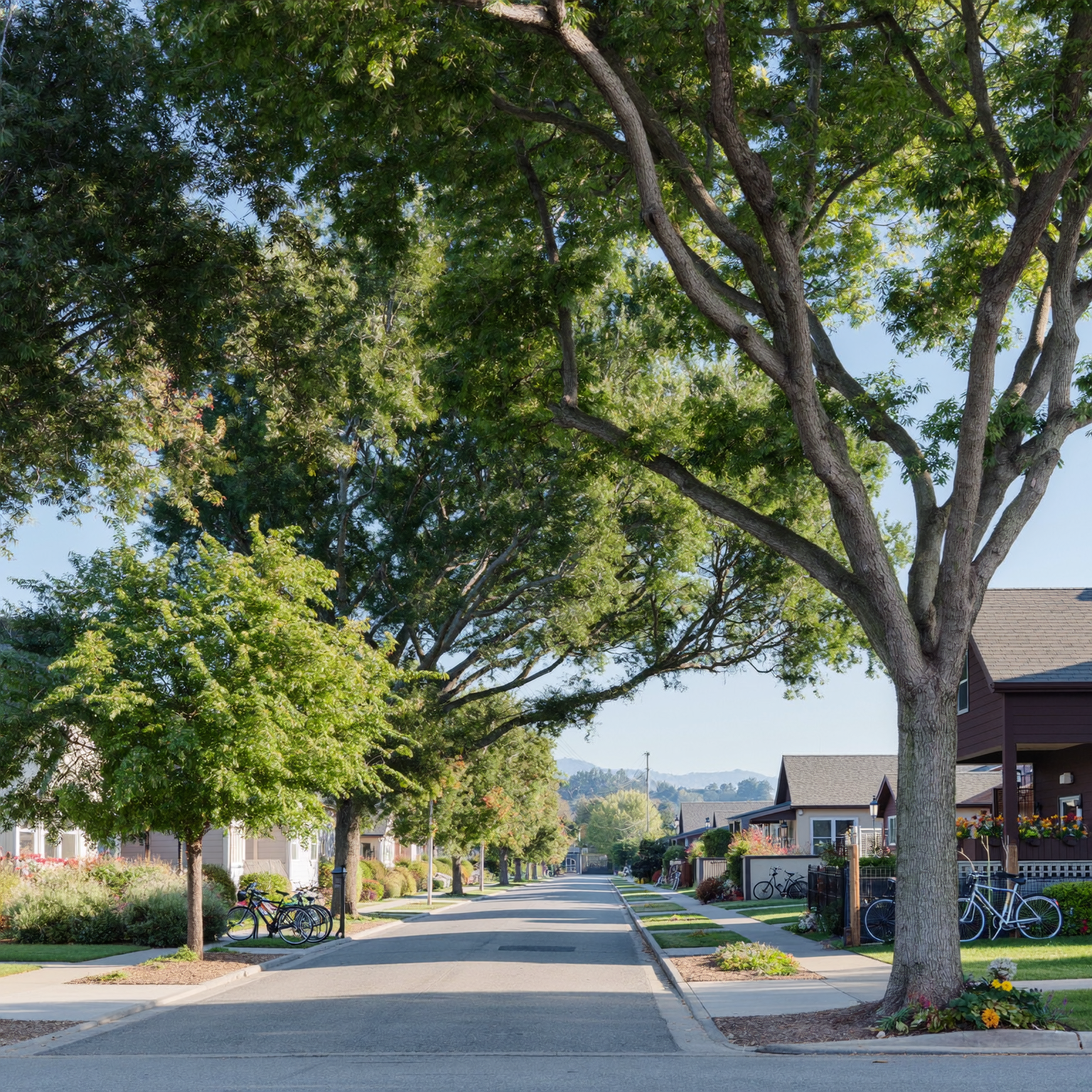
Yes, Fort Collins can be walkable for home buyers, particularly around Old Town, Campus West, and selected neighborhood centers. It is not uniformly walkable, however, so the right answer depends on the address, your daily destinations, and how much driving you want to avoid.
What does walkable mean in Fort Collins?
Walkability is more than having a sidewalk or a trail nearby. A genuinely walkable home makes it practical to complete at least some routine trips without getting in a car. That could mean walking to coffee, groceries, restaurants, parks, work, transit, or everyday services.
Fort Collins offers a mix of traditional blocks, established residential neighborhoods, commercial corridors, newer subdivisions, and lower-density edges. Two homes within the city can therefore produce completely different experiences. One may place you near connected streets and several destinations, while another may have attractive paths but require driving for nearly every errand.
I encourage buyers to define the trips they actually want to make on foot. A household that wants to walk to dinner has different priorities from someone who wants a safe route to work, a park, or a transit stop. If school proximity matters, verify attendance boundaries and transportation directly with Poudre School District for each address.
The broader Fort Collins community overview is a useful starting point, but walkability needs to be evaluated at the property level.
Which parts of Fort Collins feel most walkable?
Old Town is the clearest place to begin. Its connected street grid, mix of housing, and concentration of shops, restaurants, civic destinations, and public spaces can make routine walking practical. The tradeoff is that proximity to activity may also bring traffic, events, parking pressure, and more street activity than some buyers want. My Old Town Fort Collins neighborhood overview can help you assess that balance.
Campus West is another area where walking can be useful, especially for buyers whose routines connect to Colorado State University or nearby businesses. Housing type, student activity, parking, and noise can vary from block to block. Buyers should visit at different times rather than forming an opinion from a single showing. Explore the Campus West area before deciding whether its convenience fits your household.
Some homes near the Mason Corridor can also provide useful access to transit, paths, employment, and commercial destinations. Fort Collins' MAX service runs along this general north-south corridor, but living near a route does not automatically mean the walk to a station is comfortable. Crossings, lighting, weather exposure, and the final distance from the station to your destination all matter.
Farther south, the Harmony Corridor offers substantial employment, shopping, medical services, and regional road access. It can work well for certain commutes, but many trips are easier by car because destinations are spread along a major corridor. Buyers considering this part of town should review the Harmony Corridor neighborhood page and test the exact route between a prospective home and their regular destinations.
Why can a short map distance be misleading?
A map may show that a store or park is nearby without revealing whether the route feels practical. A short trip can include a wide arterial crossing, an indirect street pattern, a missing sidewalk connection, a poorly cleared winter segment, or an entrance located on the far side of a large property.
Trails are valuable, but trail access is not the same as everyday walkability. A home near a recreational path may be excellent for exercise while still requiring a vehicle for groceries and services. Conversely, an older neighborhood may lack a nearby recreational trail but provide a direct street grid and useful destinations within a comfortable walk.
Buyers should also distinguish between walking and biking. Fort Collins is well known for its bicycle infrastructure, but a convenient bike trip may still be too long or exposed to feel like a reasonable walk. Decide whether your goal is a pedestrian lifestyle, a bike-oriented lifestyle, or a combination of walking, cycling, transit, and driving.
How should buyers test a home's walkability?
Do not rely only on a listing description or an online walkability score. Those tools can identify nearby destinations, but they cannot tell you how a particular route feels with snow, groceries, a stroller, mobility limitations, traffic, or limited daylight.
Before making an offer, I recommend testing several real trips:
1. Walk from the home to the destination you expect to use most often. 2. Check the nearest practical grocery option rather than the nearest retail pin on a map. 3. Locate the relevant transit stop and review the route and schedule. 4. Visit during both a quiet period and a busier part of the day. 5. Look at intersections, lighting, sidewalk continuity, drainage, and snow storage areas. 6. Consider the return trip, especially if it is uphill or involves carrying bags. 7. Drive the route you would still use when weather makes walking unrealistic.
The goal is not to find a home where a car is never necessary. For many Fort Collins buyers, the more realistic goal is reducing car trips while retaining convenient access to the rest of the city and Northern Colorado.
You can use the Fort Collins home search to identify possible properties, then evaluate each address against your actual routine rather than treating the entire city as equally walkable.
How does walkability affect a home purchase decision?
Walkability can influence how buyers perceive convenience and long-term usefulness, but it should not be treated as an isolated feature. A highly walkable location may involve compromises in lot size, privacy, parking, housing age, traffic, or interior space. A less walkable location may provide a different combination of quiet, newer construction, storage, or regional road access.
The financing side matters too. After more than 14 years in mortgage lending and 76 closed transactions in the last five years, I have seen buyers focus on the purchase price while underestimating the cost of their broader routine. Transportation needs, parking arrangements, homeowner association obligations, property condition, and likely maintenance all belong in the decision.
For attached homes, buyers should review association documents for parking rules, bicycle storage, exterior maintenance, rental restrictions, and pending projects. For older detached homes in central locations, inspections should pay close attention to major systems, drainage, sewer lines, additions, and prior renovations. Walkability does not offset a property issue that strains the budget.
A useful approach is to compare the complete lifestyle offered by each home. The Fort Collins community search can help organize location options, but an in-person route test remains essential.
What should sellers know about walkability?
Sellers should describe practical proximity accurately instead of calling every property walkable. Specific statements are more useful, such as noting access to a trail, transit stop, park, commercial center, or connected street network. The route should be verified before it becomes part of the marketing.
A seller can also make pedestrian access easier to recognize by trimming vegetation near walkways, repairing obvious trip hazards where appropriate, improving exterior lighting, and ensuring gates and paths function properly. These details will not change the neighborhood, but they help buyers understand how the property connects to it.
Frequently asked questions
Can you live in Fort Collins without a car?
It is possible for some residents, especially when home, work, shopping, and transit align around central Fort Collins or another well-connected area. Many households will still find a car useful for regional travel, mountain recreation, airport trips, severe weather, and destinations outside the most connected parts of the city.
Is Old Town Fort Collins the most walkable area?
Old Town is generally the strongest starting point for buyers prioritizing a concentration of destinations and a connected street pattern. It is not automatically the best fit because housing style, parking, activity, property condition, and price all need to match the buyer's priorities.
Is Campus West walkable for people who do not attend CSU?
Campus West can still offer useful access to businesses, restaurants, transit, and central Fort Collins even if you are not connected to the university. Buyers should evaluate student activity, parking patterns, noise, and the precise block before deciding whether the location works for them.
Are Fort Collins trails useful for commuting?
Some trails can support practical trips as well as recreation, particularly when they connect with employment areas, transit, or other routes. Their usefulness depends on the origin, destination, seasonal conditions, comfort level, and quality of the connection between the trail and the property.
Does Fort Collins remain walkable in winter?
Walking remains possible in winter, but conditions can change quickly with snow, ice, wind, shade, and uneven clearing. Buyers who expect to walk year-round should examine route exposure, sidewalk responsibilities, drainage, arterial crossings, and their backup transit or driving option.
Should I trust a walkability score when buying a home?
Use a walkability score as an initial screening tool, not as the final answer. It may identify nearby destinations, but it cannot fully account for route quality, intersection comfort, topography, winter maintenance, construction, mobility needs, or whether those destinations are relevant to your routine.
The bottom line
Fort Collins can be a good choice for buyers seeking a more walkable Northern Colorado lifestyle, but success depends on choosing the right address rather than simply choosing the city. Start with your recurring destinations, test the routes in person, and weigh walkability against the property's condition, cost, parking, space, and access to the rest of the region.
The best home is not necessarily the one with the highest walkability score. It is the one where the location supports the way you expect to live on an ordinary weekday, in every season.
Related Articles
- Which Fort Collins Areas Work Best for Families?The right Fort Collins area depends on your school, commute, housing, and lifestyle priorities. This framework helps family home buyers compare locations using address-specific facts instead of broad rankings.
- Is Barefoot Lakes in Firestone Right for Buyers?Barefoot Lakes may suit buyers who want a newer master-planned community and access to the northern Front Range. The right decision depends on the home, recurring costs, commute, amenities, and property-specific due diligence.
- Moving to Colorado: Cost, Cities, Weather, Schools and LifestyleA REALTOR's answers to the five questions people ask before moving to Colorado: what homes cost, which town to choose, what the weather is really like, how schools work, and what daily life looks like on the Front Range.